
How to Win Greyhound Betting: A Data-Driven Strategy Guide
 Available in US
Data-driven strategies for smarter greyhound betting
The Numbers Behind Every Section of This Guide
- Bookmakers build a 25% margin into every greyhound race through an overround of approximately 125% - your selections must overcome this structural disadvantage before any profit is possible.
- Favourites win roughly 33% of graded UK races, varying from 31.6% to 42% by venue - backing them blindly loses money because the odds rarely compensate for even that modest win rate.
- Trap 1 wins 18-19% of races versus the theoretical 16.6%, but trap bias shifts by track, distance, and conditions - it is a data input, not a betting strategy.
- Value betting - staking only when odds exceed your assessed probability - is the only approach that produces long-term profit. Combine it with flat staking at 1-2% of bankroll per bet.
- Progressive staking systems like Martingale fail catastrophically in six-runner fields. Record-keeping and monthly reviews are what separate improving bettors from stagnant ones.
Why Most Greyhound Bettors Lose - and What the Data Says About Winning
I spent my first two years betting on greyhounds convinced I had an edge. I watched the dogs parade, studied the race cards, backed my gut - and slowly bled my bankroll dry. It took a spreadsheet, three months of meticulous record-keeping, and a bruising losing run at Romford to make me understand the real problem. I was not losing because I picked the wrong dogs. I was losing because I did not understand the mathematics working against me from the moment I placed a bet.
Every standard six-runner greyhound race carries an overround - the bookmaker's built-in margin - of roughly 125%. That means for every pound wagered across all runners, the bookmaker pays out only about 80 pence. The remaining 20 pence, give or take, is profit baked into the odds before a single trap opens. You are not competing against six greyhounds. You are competing against a pricing structure designed to extract money from you over time.
The core problem in one number: A typical greyhound race has an overround of approximately 125%, giving the bookmaker a built-in edge of around 25%. Every strategy in this guide exists to help you overcome that structural disadvantage.
UK greyhound betting turnover hit 1.5 billion pounds in 2022-23, yet the real-terms figure had already fallen 23% over three years. The market is shrinking, the casual punters are drifting away, and the money that remains is increasingly sharp. If you are still betting on instinct in that environment, the odds are stacked twice over - once by the bookmaker's margin and once by the smarter bettors moving the market around you.
This guide is not a collection of tips. It is the framework I use every day - eight years of form analysis, trap modelling, and value identification distilled into a single reference. Some of what follows will be uncomfortable. Progressive staking systems do not work. Backing the favourite is not a strategy. And no, there is no secret trap that always wins. But if you are willing to treat greyhound betting as a data problem rather than a guessing game, the edge is there.
The Greyhound Betting Market in Numbers
Most punters never look at the industry from the outside. They see six dogs, a race card, and a set of odds. But understanding the scale and direction of the market you are betting into changes how you think about every wager. I started paying attention to the macro numbers after a trainer I knew casually mentioned that half the tracks he raced at as a young man no longer existed. That sent me down a research path I have never really come back from.
$2.1 billion
Estimated global greyhound racing market value in 2024, projected to reach $2.8 billion by 2033 at a compound annual growth rate of 4.2%.
GBP 1.5 billion
UK greyhound betting turnover in 2022-23 - down 23% in real terms over three years.
18 stadiums
The number of GBGB-licensed greyhound tracks operating in the UK as of January 2025, down from over 70 in the post-war era.
The global greyhound racing market sits at around $2.1 billion, with some estimates closer to $2.4 billion depending on how you account for virtual racing and unlicensed operations. Growth projections point to $2.8 billion by 2033. That might sound healthy until you strip out the virtual and digital segments. The traditional trackside model - physical stadiums, live races, on-course bookmakers - is contracting in most mature markets.
In the UK, the picture is sharper. The 1.5-billion-pound turnover figure masks a structural decline that Mark Bird, the outgoing GBGB Chief Executive, put bluntly: the industry is "already half a million down" on where it was, and the impact of new taxes on bookmaker contributions could "lead to the demise of the sport." That is not hysteria from an outsider. That is the man who ran the governing body acknowledging the financial pressures squeezing the sport from multiple directions.
For bettors, this context matters practically. Fewer tracks mean fewer races, which means fewer opportunities to find value. The 18 GBGB-licensed stadiums still stage around 25,000 BAGS races annually - bookmaker-funded daytime fixtures forming the backbone of the daily betting card - plus open and evening meetings. But the variety of tracks, distances, and competitive grades that existed a generation ago has narrowed.
Mobile betting now accounts for more than 70% of all greyhound wagers. The shift from trackside to screen has changed not just how bets are placed but how odds are formed - markets move faster, information travels quicker, and the window for finding value has shortened.
There is a counterpoint to the decline narrative. Arena Racing Company reported a 5% increase in greyhound stadium attendance in 2025, with Sarah Newman, their marketing communications manager, noting that growing footfall amid intense competition for the leisure pound was "a great achievement." Dunstall Park, the first new greyhound track built from scratch in over a decade, recorded a 324% jump in attendance for the Premier Greyhound Racing Oaks final compared to the previous year. The macro trend is downward, but pockets of growth exist where investment meets demand.
The British Greyhound Racing Fund collected 6.75 million pounds from voluntary bookmaker contributions in 2024-25 - just 0.6% of greyhound turnover - while total annual prize money exceeds 15 million pounds and track attendance remains above 2 million per year. These are not numbers that describe a dying industry, but they describe one under pressure, and that pressure shapes the betting markets you operate in every day.
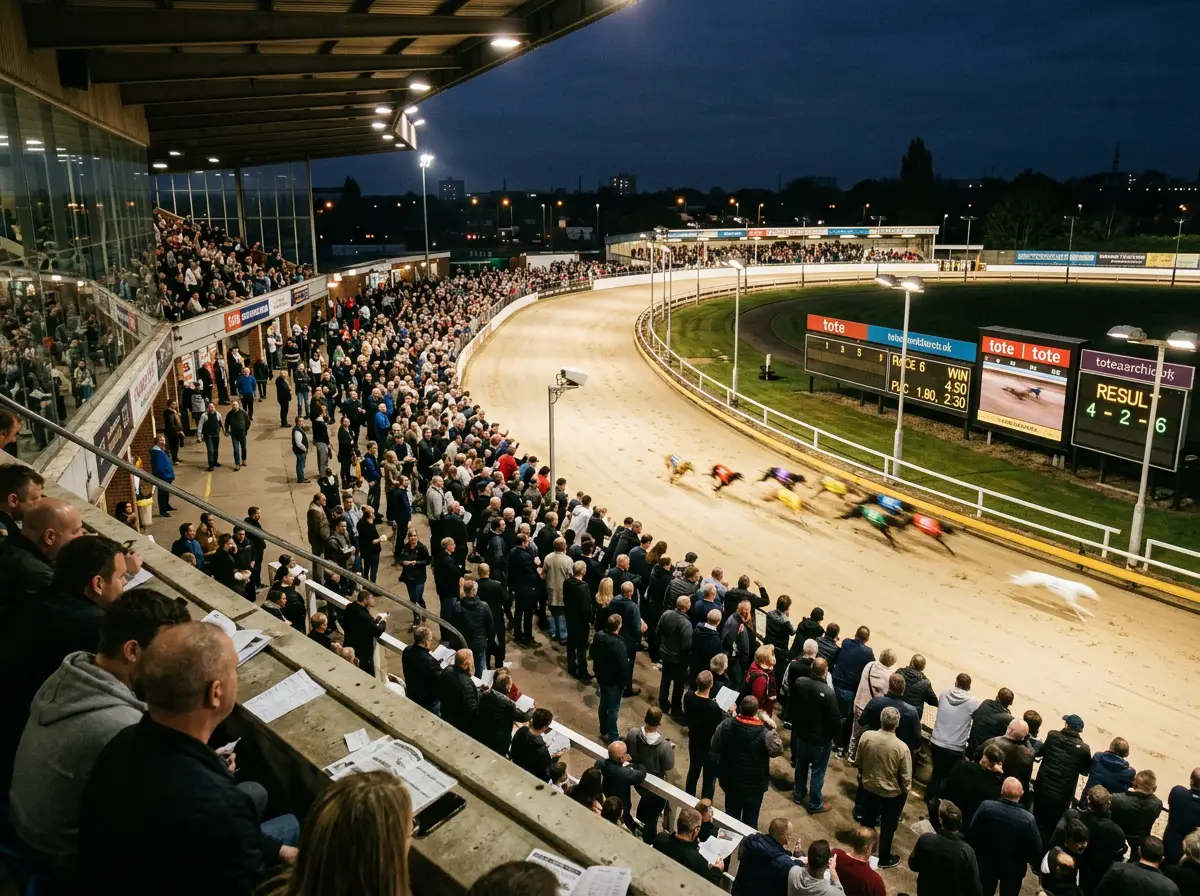
The market sets the stage. Now let us look at the mechanism that makes winning within it so difficult - the way greyhound odds are constructed.
How Greyhound Odds Work Against You
A friend of mine once told me he "understood" greyhound odds because he knew that 3/1 meant you get three pounds back for every pound staked. He was right about the payout. He was completely wrong about what those odds actually represented - and that misunderstanding cost him steadily for years. The difference between knowing what odds pay and knowing what odds mean is the first gap every serious bettor needs to close.
Overround - the total implied probability of all runners in a race, expressed as a percentage. In a fair market this would be exactly 100%. In a bookmaker's market, it exceeds 100%, and the excess is the bookmaker's built-in profit margin.
Starting Price (SP) - the official odds of a greyhound at the moment the traps open, determined by on-course bookmakers. It serves as the default settlement price when no fixed odds have been taken.
Implied probability - the chance of winning that a set of odds represents. Calculated by dividing 1 by the decimal odds. For example, decimal odds of 4.0 imply a 25% chance of winning.
Every set of odds can be converted into a probability. Decimal odds of 3.0 imply a 33.3% winning chance. Odds of 6.0 imply 16.7%. In a perfectly fair six-runner race where every dog had an equal chance, each would be priced at 5.0 (20% probability), and the total implied probability across all runners would be exactly 100%. Bookmakers do not operate fair markets. They inflate each runner's implied probability slightly so that the total exceeds 100% - that excess is the overround.
Overround calculation for a typical six-runner greyhound race
Suppose the six runners are priced at decimal odds of 3.0, 4.0, 5.0, 7.0, 9.0, and 12.0.
Implied probabilities: 1/3.0 + 1/4.0 + 1/5.0 + 1/7.0 + 1/9.0 + 1/12.0
= 0.333 + 0.250 + 0.200 + 0.143 + 0.111 + 0.083
= 1.120, or 112.0%
The overround here is 12%. Every pound wagered returns, on average, only 89 pence. In practice, greyhound overrounds often reach 125% or higher, meaning the bookmaker's edge can be 25% - far more than the 2-5% you face in football or horse racing markets.
Why is the greyhound overround so much larger than in other sports? Small fields mean each price can be shaded without looking wrong. Greyhound markets attract less scrutiny from professional gamblers than horse racing or football, so bookmakers face less pressure to sharpen prices. And the sheer volume of races - dozens daily across multiple tracks - means individual markets get less attention from odds compilers, keeping margins wide.
For a deeper breakdown of how fractional, decimal, and American odds formats relate to each other, and how to calculate the overround step by step for any race, I cover the full mechanics in greyhound betting odds explained. Here, the point is strategic: you are starting every race at a 20-25% disadvantage. Your selections need to overcome that margin before you see a penny of profit. That single fact shapes everything else in this guide.
Understanding the overround also reframes how you evaluate odds. A dog priced at 3/1 is not "paying well." It is paying well relative to what the bookmaker believes its chances are - and the bookmaker has already inflated those chances in their own favour. The question is never "are these good odds?" The question is "are these odds higher than this dog's true probability of winning?" That is where value betting begins.
Reading Form: The Foundation of Every Winning Bet
I remember watching a dog at Hove about five years ago - a B3 grader who had finished fourth, fifth, fourth in her last three runs. The casual punter next to me dismissed her as "no good." I had already noticed that all three runs were over 480 metres in A3 company after a grade rise, her sectional times to the first bend were consistently fast, and she was dropping back to B3 over 285 metres - her ideal distance with a clear inside run from trap one. She won by three lengths at 7/1. The race card told the whole story. My neighbour just did not know how to read it.
Form analysis is the process of evaluating a greyhound's recent racing history to estimate its chances in a given race. It is the single most important skill in greyhound betting, and it separates bettors who make informed decisions from those who pick on name, trap colour, or gut feeling. Favourites win roughly 30-35% of graded races in the UK - an average of 33.27% across 18 GBGB stadiums analysed in 2021, drawn from 13,748 favourite wins in 41,321 races. That means two out of three favourites lose. If you cannot read form well enough to identify when the favourite is vulnerable and when an outsider has been undervalued, you are flying blind.
The race card is your primary data source. Every column - trap number, dog name, form figures, recent times, weight, trainer, grade, and sectional splits - carries information that feeds into your assessment. The winning favourite rate varies enormously by venue, from 31.6% at Kinsley to 42% at The Valley, which tells you that the same form-reading approach produces different results depending on where you apply it. Track knowledge is not optional. It is a core part of form analysis.
A greyhound race card typically includes: trap number and colour, dog name and breeding, recent form figures (finishing positions), race times and sectional times, weight at last weigh-in, trainer name, grade of previous races, and comments from the racing manager. Each column adds a layer to your picture of the dog's current ability and suitability for the race.
I cannot compress the full form-analysis process into a pillar overview and do it justice. The detail - how to decode every column, how to compare sectional times across meetings, how grade movements signal opportunity or danger, and how trainer form adds a hidden edge - is covered in my dedicated greyhound form analysis guide. What matters here is the principle: form analysis is your primary tool for estimating a dog's true winning probability, and without a reliable probability estimate, you cannot identify value. Every section that follows assumes you are doing this work.

Form tells you how a dog runs. The next piece of the puzzle is where it runs from - and why starting position matters more than most bettors realise.
Trap Bias: What the Numbers Actually Show
18-19%
Actual win rate for trap 1 (inside rail) across UK greyhound racing, versus the 16.6% you would expect if all six traps were equal.
Ask ten casual greyhound bettors which trap is best and you will get ten different answers, most of them based on superstition. "Trap one always wins." "The outside box is cursed." "Trap three is the lucky one at my local." I have heard them all. The data tells a more nuanced story - and it is a story worth understanding because trap draw is one of the few structural variables you can quantify before a race.
In a perfectly balanced world, each of the six traps in a standard UK greyhound race would produce a winner 16.6% of the time. In reality, trap 1 - the inside rail position - wins at a rate of approximately 18-19%. That two-to-three percentage point advantage sounds small until you compound it over hundreds of races. The reason is geometric: the inside dog has the shortest path to the first bend. In a sport where the first bend often decides the outcome, that shorter path translates into a measurable advantage, especially over sprint distances.
But trap bias is not uniform. It shifts by track, by distance, and by conditions. A tight circuit with sharp bends amplifies the inside advantage. A wider, more galloping track reduces it. Wet conditions tend to favour inside traps further because dogs on the outside cover more ground on a slower, heavier surface. The detailed venue-level breakdown, distance effects, and condition adjustments are mapped out in greyhound trap bias statistics.
| Trap Position | Theoretical Win Rate | Observed Win Rate (Approximate) | Edge vs Theory |
|---|---|---|---|
| Trap 1 (Inside) | 16.6% | 18-19% | +1.4 to +2.4% |
| Trap 2 | 16.6% | 17-18% | +0.4 to +1.4% |
| Trap 3 | 16.6% | 16-17% | Roughly neutral |
| Trap 4 | 16.6% | 16-17% | Roughly neutral |
| Trap 5 | 16.6% | 15-16% | -0.6 to -1.6% |
| Trap 6 (Outside) | 16.6% | 14-16% | -0.6 to -2.6% |
The trap bias data is useful but limited. It is a starting point for your analysis, not a conclusion. A fast railer drawn in trap 1 on a tight circuit is a different proposition entirely from a wide-running dog squeezed into the same box. The trap number tells you about the starting position's structural advantage. Form analysis tells you whether the specific dog can exploit it. Combining both is where the edge starts to form.
Finding Value: The Only Strategy That Beats the Overround
There was a moment, probably three years into my betting career, when the concept of value finally clicked. I had been backing a dog at Sunderland - strong form, good trap draw, fast sectional times. The price was 2/1. I backed it, it won, and I felt clever. Then I sat down and calculated that based on its form, the dog's true winning probability was around 45%. At 2/1 (decimal 3.0), the implied probability was 33.3%. The bookmaker was offering me odds that underestimated the dog's chances by twelve percentage points. That was not a good bet. That was a gift. And once I started thinking in those terms, everything changed.
Value betting is the practice of identifying odds that are higher than the true probability of an outcome. It is not about picking winners. It is about picking prices. A dog with a 20% chance of winning is a value bet at 6/1 (implied probability 14.3%) and a terrible bet at 3/1 (implied probability 25%). The same dog, the same race, the same form - but the price makes one bet profitable over time and the other a guaranteed loser.
Calculating expected value on a greyhound bet
Step 1: Estimate the dog's true winning probability from your form analysis. Suppose you assess it at 30%.
Step 2: Note the available decimal odds. Suppose the bookmaker offers 4.5.
Step 3: Calculate expected value (EV). EV = (probability x odds) - 1. EV = (0.30 x 4.5) - 1 = 1.35 - 1 = +0.35.
Step 4: Interpret the result. A positive EV of +0.35 means that for every pound staked, you expect to gain 35 pence over time. This is a strong value bet.
Step 5: Compare to a negative example. The same dog at odds of 2.5 gives EV = (0.30 x 2.5) - 1 = -0.25. You lose 25 pence per pound over time. No value.
The second favourite wins 16-18% of greyhound races. The fifth and sixth favourites win just 5-6% each. These distributions are remarkably stable across large samples. What fluctuates is the price attached to each position in the market. When a second favourite is priced as if it has a 12% chance but your analysis suggests 18%, you have found value. When a favourite is priced at 50% implied probability but wins only 33% of the time at that venue, the bookmaker has overpriced the favourite and the value may sit elsewhere in the field.

In open races - higher-quality events with stronger fields - favourites win significantly more often, reaching up to 52% at certain venues. This sounds like a reason to back favourites in opens, but the odds reflect that higher win rate. The question, always, is whether the odds overcompensate or undercompensate for the actual probability.
Do
- Estimate a dog's winning probability from form before looking at the odds
- Compare your probability estimate to the implied probability of the available odds
- Bet only when the odds exceed your estimated probability - positive expected value
- Track your selections and review whether your probability estimates are accurate over time
- Use multiple bookmaker accounts to find the best available price for each selection
Don't
- Back a dog because "the odds look good" without estimating its true chances
- Assume that short-priced favourites are automatically safe bets
- Chase long-priced outsiders because the potential payout is exciting
- Rely on a single bookmaker when prices vary significantly across the market
- Abandon value betting after a short losing run - variance is normal and expected
Mark Bird, in his retirement statement as GBGB CEO, observed that UK greyhound racing is "better placed to enter a second centenary of sporting endeavours" but warned against complacency. The same applies to value bettors. The edge exists, but it is narrow and demands constant calibration. I cover tissue prices, oddschecker outliers, and smart money signals in depth in greyhound value betting. The principle from this section is simple: positive expected value is the only sustainable path through a 125% overround market.
GREYedge Race Lab
Trap-Adjusted Value Engine
Strip the bookmaker’s margin out of a six-dog market, tilt the result for track shape, distance and going, and see the minimum price every trap is worth backing at. Forecast and tricast break-even prices included.
Enter the market price for every runner. Leave a trap blank if it is vacant or a non-runner. If you have shopped around, add the best price you can actually get — that is the price the edge is measured against.
Race conditions
Trap-model weight decides how far the structural draw bias pulls the market price. The odds compiler already knows the draw, so anything above roughly 40% double-counts it. Set it to 0% to see the raw margin-free market.
The field
The book
Runner by runner
Compare the three margin models
| Trap | Market price | Proportional | Power | Shin |
|---|
Proportional shaves every runner by the same factor. Power and Shin both take more out of the outsiders than the favourite, which is what the evidence on favourite–longshot bias says a bookmaker actually does. In a 25% market the gap between the models is worth several points of price on the longest runner, so the model you pick changes which bets qualify.
How the trap adjustment is built
The starting point is the observed win rate by trap across UK racing: 18.5% for trap 1 down to 15.0% for trap 6, against 16.6% if the boxes were equal. Each trap’s gap from 16.6% is then multiplied by three factors before it is applied.
- Track shape: tight circuits amplify the inside advantage (×1.45), wide galloping circuits flatten it (×0.60).
- Distance: sprints are decided at the first bend, so the draw matters more (×1.30); staying trips give the field time to sort itself out (×0.75).
- Going: a fast, compact surface lets the inside dogs corner cleanly (×1.20); wet and heavy ground blunts the early burst and narrows the gap (×0.75 and ×0.55).
The adjusted trap profile is then blended with the margin-free market in log space, at the weight you set. Trap bias is an input to your assessment, not a bet in itself — a wide runner in trap 1 does not inherit trap 1’s record.
Forecasts and tricasts run on the probabilities from tab one, so fill the card there first. A reverse forecast costs two units and a combination tricast costs six, which is why the dividend you need is far bigger than most punters assume.
Pick the finishing order
Plain Harville assumes the finishing order is a straight re-draw on win probability. That overstates how often the favourite fills the places, so the standard setting discounts each subsequent position — the same correction used on horse-racing place markets.
Your combination
The most likely outcomes
| Forecast | Chance | Fair dividend |
|---|
| Tricast | Chance | Fair dividend |
|---|
A strike rate and an average price are enough to tell you what your record should look like, how deep the losing runs go, and whether your bankroll survives them. Change one number and watch what happens.
Your numbers
What the numbers say
What a doubling-up plan really costs
| Losers in a row | Chance of that run | Staked so far | Next stake |
|---|
Every one of those bets is placed into a market with a 20–25% built-in margin. Doubling up does not beat the overround; it just reaches your bankroll limit faster.
GREYedge Race Lab is an analysis aid, not a tipping service. Every output depends on the prices and form reads you enter, and no model turns a negative-expectation market into a positive one. 18+ only. Gambling involves risk — only stake what you can afford to lose. Support: BeGambleAware.org and GamCare.
Staking Plans: Why Martingale Fails and Flat Staking Survives
No staking system can turn a losing selection method into a profitable one. If your selections do not identify value, no amount of stake manipulation will save you. Staking plans manage risk and optimise returns on top of an existing edge - they do not create one.
I receive more questions about staking systems than about any other topic. "Should I double my stake after a loss?" "What about the Labouchere method?" "I read about a system that guarantees profit." The appeal is obvious - a mechanical rule that removes the uncertainty of betting. The reality is that every progressive staking system, without exception, carries catastrophic risk in greyhound racing. And I can explain why in a single paragraph.
The Martingale system requires you to double your stake after every losing bet. In a six-runner field where the favourite wins around 33% of the time, you face a 67% chance of losing any given race. Five consecutive losses - a 13.5% probability, meaning it happens regularly - escalate a ten-pound starting stake to a 320-pound sixth bet, all riding on a dog with a one-in-three chance. Ten consecutive losses require a stake exceeding 10,000 pounds. The overround of approximately 125% compounds the problem: you are escalating stakes into a market already structured to extract money. Progressive staking does not overcome the overround. It accelerates your exposure to it.
Flat staking - betting the same fixed amount on every selection - is the approach that survives contact with reality. It does not amplify losses during inevitable cold runs. It does not require an ever-growing bankroll to sustain. And it allows you to measure your true edge with clarity, because your profit or loss over a sample of bets directly reflects the quality of your selections, not the volatility of your stake sizes.
Flat staking versus Martingale over a 20-bet losing sequence
Flat staking at 10 pounds per bet: total loss after 20 consecutive losers = 200 pounds. Manageable. Recoverable.
Martingale at 10 pounds starting stake: total loss after 20 consecutive losers = 10,485,750 pounds. The 21st bet would require a stake of 10,485,760 pounds. This is not a hypothetical warning. In a market with a 33% favourite win rate, a run of 20 losses on backing favourites - while extreme - is not a statistical impossibility over thousands of bets.
The detailed comparison of flat versus percentage-based staking, Kelly criterion adjustments, and simulation data over 500-plus-bet sequences is covered in greyhound bankroll management. For this overview, the takeaway is direct: use flat staking at 1-2% of your total bankroll per bet, and let the quality of your value selections do the work. If your selections are not profitable on level stakes, no staking plan will fix them.
Track Conditions, Weather and Their Measurable Impact
I once drove forty minutes to Sunderland for an evening meeting, arrived to find it had been raining steadily for three hours, and realised I needed to rethink every selection I had made at my desk that afternoon. The track was heavy, the inside running rail was cutting up, and two of my three picks were outside-drawn wide runners whose form had been compiled on dry, fast surfaces. I scrapped two of the three and backed only the one dog whose form included a win on a heavy track from trap two. She won by four lengths. The other two finished in the rear.
Track conditions are not a footnote to greyhound analysis. They are a variable that can flip the value assessment of every runner in a race. UK greyhound tracks use sand-based surfaces, and the moisture content changes the running characteristics dramatically. A dry, fast surface favours early-pace dogs who can sprint to the first bend and hold the rail. A wet, heavy surface slows the initial burst, reduces the advantage of inside traps, and benefits dogs with stamina and late pace who can grind through the final two bends.
The main surface types across UK greyhound tracks are natural sand, treated sand, and synthetic composite. Each responds differently to weather. Natural sand absorbs rain quickly and becomes heavy, slowing times significantly. Synthetic surfaces drain better and maintain more consistent running times in wet conditions. Knowing your track's surface type is essential before adjusting your analysis for weather.
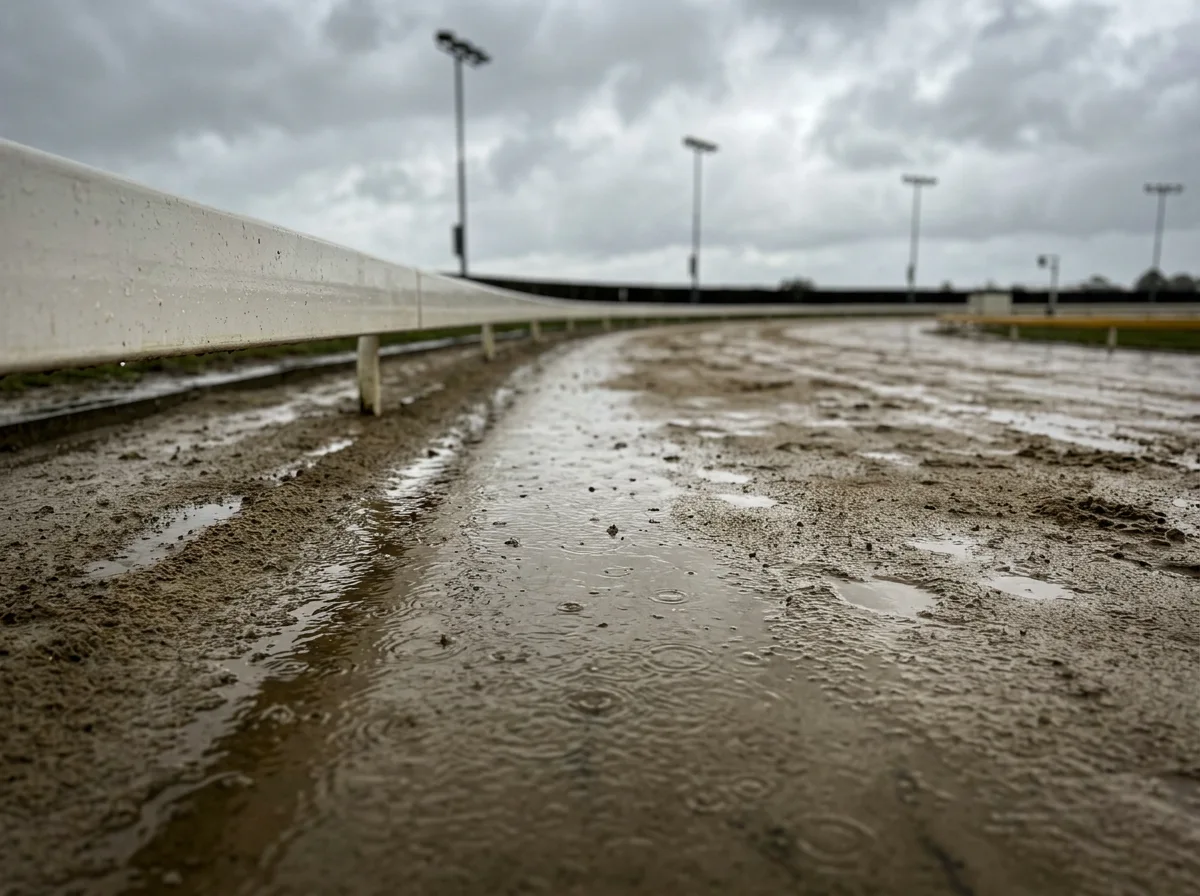
Temperature also matters in ways most bettors overlook. Hot, dry conditions compact the surface and produce faster running times. This tends to amplify the advantage of inside traps because the hard surface allows cleaner cornering at speed. Cold, damp conditions soften the surface and produce slower times, often narrowing the gap between inside and outside traps as all dogs struggle to maintain pace through the turns.
Wind is the least discussed condition factor, but at exposed circuits it can matter. A strong headwind on the back straight slows the leaders and benefits closers. A tailwind accelerates early-pace dogs and can make front-runners almost impossible to peg back.
Some experienced track-goers check the forecast not for whether to bring an umbrella, but for whether to adjust their trap bias assumptions. A course that favours trap 1 by three percentage points in dry conditions may show no inside bias at all after sustained rainfall - and the bookmakers' odds rarely adjust quickly enough to reflect this.
The practical application is straightforward: check conditions before finalising selections, weight your form analysis toward runs on similar surfaces, and be willing to scratch a selection if the conditions do not suit.
The 7-Point Pre-Race Checklist
After years of refining my process, I boiled my pre-race routine down to seven checks. Not because seven is a magic number, but because these are the seven factors that, when I skip any one of them, cost me money. I have printed this list and pinned it next to my screen. It stops me from lazy bets - the ones where I "just know" a dog will win and skip the homework. Those are always the bets that hurt the most.
Complete all seven checks before placing a greyhound bet
- Recent form: Review the dog's last four to six runs. Look at finishing positions, race times, sectional times, and the grade of competition. A string of fourths in A1 may be stronger form than a string of firsts in B4.
- Trap draw suitability: Match the dog's running style to its starting position. A confirmed railer in trap 1 is ideal. A wide runner in trap 1 faces crowding on the first bend. Check how the dog has performed from this trap at this track specifically.
- Grade context: Is the dog racing at, above, or below its natural grade? A grade drop into weaker company after competitive performances in a higher class is one of the strongest value signals in greyhound racing.
- Track and distance suitability: Has the dog raced at this track before? Does its best form come over this distance? A 480-metre specialist drawn in a 285-metre sprint is a different proposition entirely.
- Conditions check: What is the weather doing? What is the track surface like today? Cross-reference with the dog's form on similar surfaces.
- Trainer form: Is the kennel in a hot streak or a cold patch? Trainers go through form cycles just as dogs do, and a kennel firing at a 30% win rate tells you something about preparation and dog fitness.
- Odds assessment: Only after completing the first six checks, look at the odds. Estimate the dog's winning probability and compare it to the implied probability of the available price. If there is no value, do not bet - regardless of how good the form looks.
The order matters. I leave odds until last because looking at the price first anchors your assessment. If you see 5/1 before you read the form, you start looking for reasons to justify a bet at that price. If you complete your analysis first and discover the dog is 5/1 when your form study suggests a 25% winning chance, you have found genuine value at odds implying only 16.7%.
This checklist is not a guarantee. But it imposes a structure that prevents the most common analytical errors - betting without form context, ignoring trap suitability, and backing dogs at bad prices. Over hundreds of races, that structure compounds into a measurable edge.
Five Mistakes That Drain Your Greyhound Betting Bankroll
Every serious bettor I know can trace their biggest losses not to bad luck but to bad habits. I certainly can. The five mistakes below are the ones I see most often - in other people's approaches and, if I am honest, in my own early career. Recognising them is easy. Eliminating them takes deliberate effort.
Do
- Select your spots - three to four races per meeting maximum, where your analysis identifies clear value
- Keep a written record of every bet, including reasoning and probability estimate
- Treat every race independently - a losing bet has no bearing on the next race
Don't
- Bet every race out of boredom or the need for "action"
- Increase your stake after a loss - chasing is the fastest route to a blown bankroll
- Back a dog on name, colour, or trap number without studying form
Mistake 1: Betting every race. A typical BAGS meeting has twelve races. I have never found value in more than four or five at a single meeting, and my average is closer to three. Betting all twelve means backing dogs where your analysis is weak or nonexistent. Those bets are not "a bit of fun." They are systematic donations to the bookmaker's overround.
Mistake 2: Chasing losses. You lose the first three races and decide to increase your stake on the fourth to recover. This is the emotional decision that destroys more bankrolls than any other. The fourth race has no memory of the first three. Your probability assessment does not improve because you lost money earlier. All you have done is increase your exposure on a single event, which is exactly what the overround is designed to exploit.
Mistake 3: Ignoring form data. Betting on trap number, dog name, or "a feeling" is not a strategy. It is entertainment. And it is entertainment with a negative expected value of roughly 20-25%. Favourites win about 33% of graded races. That means even the market's best guess is wrong two-thirds of the time. Without your own form analysis to refine that guess, you have no basis for identifying when the market is right and when it is wrong.
Mistake 4: Following the crowd. When a dog's price shortens dramatically before a race, casual bettors pile in, assuming "someone knows something." Sometimes they do. Often the move is driven by one large bet from a single account triggering a cascade of price adjustments. Following late money without understanding the form behind it is speculation, not analysis.
Mistake 5: No record keeping. If you cannot tell me your strike rate, your average odds, and your ROI over the last three months, you do not know whether your approach is working. A simple spreadsheet tracking date, track, selection, odds, result, and profit or loss transforms your betting from a hobby into a measurable process.
Regulatory Changes Every Greyhound Bettor Should Know
Three jurisdictions banned greyhound racing within weeks of each other in early 2026, and if you bet on greyhounds without knowing that, you are operating with an incomplete map of where the sport is headed. Regulation does not just affect the industry. It affects the number of races available to bet on, the quality of fields, the liquidity of markets, and ultimately the size of the edge you can find.
2026 bans at a glance: Scotland voted to ban greyhound racing on 18 March 2026, with 70 votes in favour and 27 against. Wales followed the next day, voting 39-10 to ban the sport. New Zealand confirmed a complete phase-out, with the final race to be held no later than July 2026.
Scotland and Wales had no GBGB-licensed tracks at the time of their bans, so the immediate impact on regulated UK racing is limited. But the legislative momentum matters. It signals a political environment increasingly hostile to greyhound racing, putting pressure on the remaining 18 English tracks. Dennis McKeon, a former trainer and longtime industry commentator, captured the mood after the Florida closures: it "kind of hurt us all" and was "a dagger in the heart" of the industry.
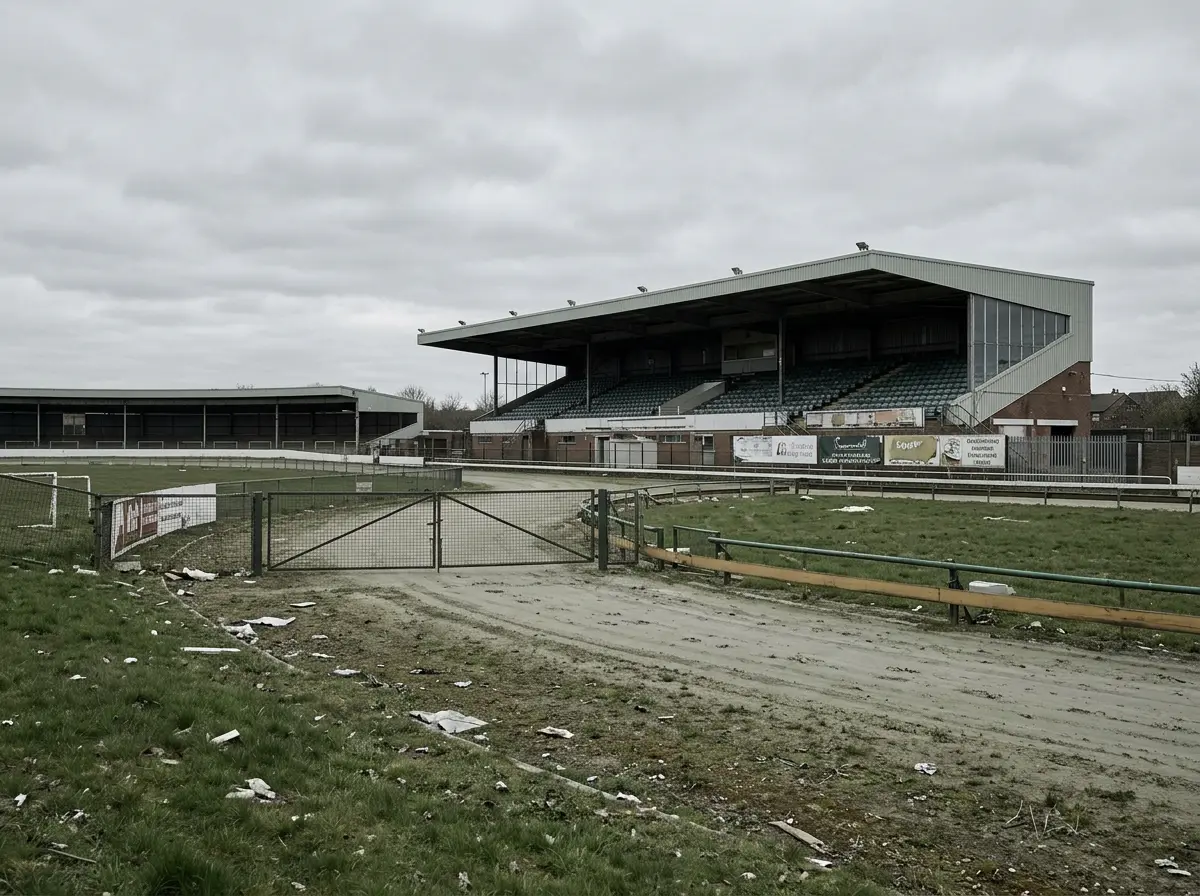
In the United States, only two active greyhound tracks remain, both in West Virginia. Florida, once the heartland of American greyhound racing, saw its betting volumes fall by 72% between 1990 and 2013 before voters banned the sport entirely in 2018. The global trajectory is clear: greyhound racing is contracting in most Western markets.
For bettors, the practical implications are twofold. First, the pool of available races is unlikely to grow and may shrink further - specialising in specific tracks becomes more valuable as fixtures tighten. Second, financial pressure on the sport creates uncertainty about the long-term viability of smaller venues, and if a track closes, the form lines built around it lose their relevance overnight.
On the welfare front, the data is more encouraging than the headlines suggest. The GBGB's track injury rate fell to a record low of 1.07% in 2024, with the fatality rate at 0.03% - roughly eight times lower than horse racing. The successful retirement rate reached 94%, up from 88% in 2018. Public perception of welfare directly influences regulatory decisions, and these improving outcomes are the sport's strongest argument against further bans.
Whether you view these changes as a threat or a natural evolution, the data-driven response is the same: stay informed, adjust your track selection as the landscape shifts, and do not build a strategy around assumptions that may not hold in two years.
Building a Long-Term Winning Approach
Eight years ago I started with a 200-pound bankroll, a free spreadsheet, and a lot of wrong assumptions. Today I operate with a structured process that produces consistent, measurable results - not because I have a secret system, but because I have eliminated the habits and beliefs that were costing me money. The framework in this guide is not complicated. It is disciplined. And discipline, in greyhound betting, is the scarcest resource of all.
The long-term approach rests on five principles working together: understand the market and its pressures; learn the mathematics of odds and overround; invest deeply in form analysis so your probability estimates are reliable; manage your bankroll with flat staking and strict loss limits; and keep records that tell you whether your process is actually working. None of these is optional. Drop any one and the others cannot compensate.
The bettors I see failing long term are not the ones who lack knowledge. They are the ones who lack consistency. They read the form carefully on Monday, skip it on Tuesday because they are busy, and bet on gut feeling on Wednesday. They keep records for a month, get bored, and stop. They identify value but cannot resist backing a "fun" outsider at bad odds. The edge in greyhound betting is real but narrow, and it only compounds over hundreds of carefully selected bets. Patience is the one quality that no guide can teach you - but without it, nothing else in these pages will matter.
Winning at greyhound betting is not about finding a secret formula. It is about combining form analysis, value identification, flat staking, and rigorous record-keeping into a repeatable process - then executing that process with the discipline to skip races where no value exists. The edge is narrow, the overround is real, and the market rewards patience far more than it rewards confidence.
Frequently Asked Questions
What percentage of favourites win in greyhound racing?
Across 18 GBGB-licensed stadiums analysed in 2021, favourites won approximately 33.27% of graded races - roughly one in three. The rate varies significantly by venue, from 31.6% at Kinsley to 42% at The Valley. In open races, favourites win more often, reaching up to 52% at certain venues. Even so, the market's most-fancied runner loses roughly two out of every three graded races, which is why backing favourites without a value assessment is not a sustainable strategy.
Is there a greyhound betting system that actually works long term?
No staking system - Martingale, Labouchere, Fibonacci, or any other mechanical progression - produces long-term profit without value selections underneath it. A staking system manages how much you bet, not what you bet on. If your selections do not identify odds higher than the true winning probability, varying your stakes only changes the speed at which you lose. The only proven approach is value betting combined with flat staking: estimate each dog's real chances, bet only when the odds exceed that estimate, and stake a consistent 1-2% of your bankroll per selection.
What is the best trap in greyhound racing?
Trap 1, the inside rail position, has the highest average win rate across UK greyhound racing at approximately 18-19%, compared to the theoretical 16.6% if all traps were equal. The advantage comes from the shorter path to the first bend. However, there is no universally "best" trap. Trap bias varies by track geometry, race distance, surface type, and weather conditions. At some venues, trap 2 outperforms trap 1 over longer distances. At others, outside traps hold their own on wide, sweeping circuits. The data is useful as a starting point, but it never overrides form analysis for the specific dog drawn in that trap.
Can you make money from greyhound betting long term?
Yes, but not through luck or casual punting. Long-term profitability requires consistent form analysis, value betting to ensure you only back odds exceeding your probability estimates, flat staking to manage risk, and disciplined record-keeping to refine your process. The bookmaker's overround of roughly 125% means you start at a 20-25% structural disadvantage. Overcoming that demands specialisation - typically focusing on one or two tracks - and the patience to skip races where no value exists.
What is the bookmaker's overround in greyhound racing and why does it matter?
The overround is the total of all implied probabilities in a race. In a fair market it would be exactly 100%. In a typical six-runner greyhound race, it sits at approximately 125%, meaning the bookmaker has built in a margin of roughly 25%. For every pound collectively wagered, the bookmaker expects to pay back only about 80 pence. To be profitable, your selections need to consistently identify odds that are higher than the true probability of the outcome.
How do track conditions affect greyhound racing results?
Track conditions change the running characteristics of the surface, which affects pace, trap bias, and race dynamics. Wet conditions slow the surface, reduce the inside trap advantage, and benefit dogs with stamina who perform well on heavier ground. Dry, hard conditions produce faster times, amplify the advantage of inside traps due to cleaner cornering at speed, and favour early-pace dogs who can sprint to the first bend. Wind can also be a factor at exposed circuits, assisting or hindering front-runners depending on direction. Checking conditions before finalising your selections - and weighting your form analysis toward runs on similar surfaces - is a core part of the pre-race process.
How do sectional times help predict greyhound race outcomes?
Sectional times measure how fast a greyhound covers the distance from trap to the first bend - the phase that most often determines the outcome. A dog with consistently fast sectionals is likely to lead into the first bend, secure the inside line, and avoid crowding. Finishing times tell you how fast a dog ran the entire race, but sectionals reveal how it ran. Two dogs with identical finishing times may have very different pace profiles, and that distinction is critical when assessing performance from a specific trap draw.
