
Greyhound Betting at the Track: How On-Course Wagers Differ From Online
 Available in US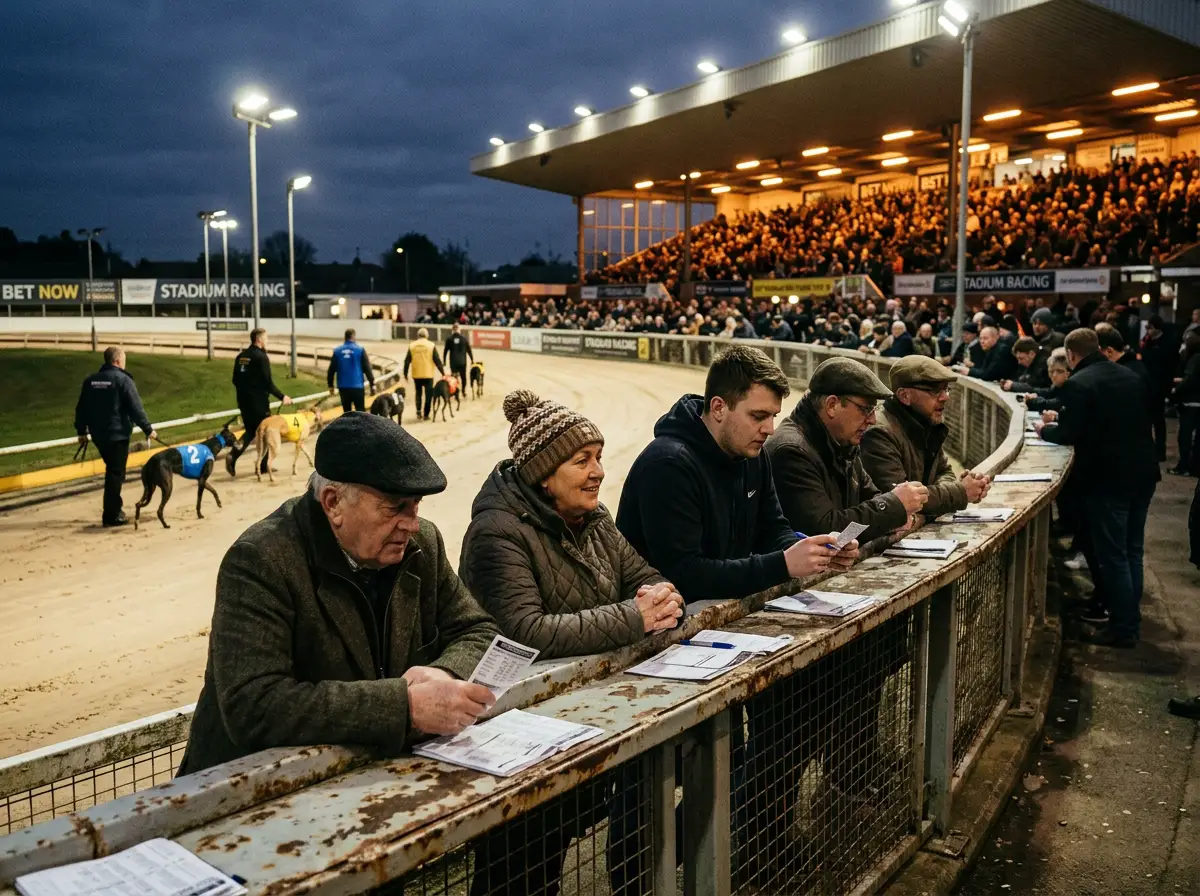
Trackside Betting Gives You Information Screens Cannot
Over 2 million people visit UK greyhound tracks each year, and while most of them are there for the social experience, the ones who pay attention gain something that no app or data feed can provide: a live look at the dogs before they race. Arena Racing Company reported a 5% increase in greyhound stadium attendance in 2025, suggesting that the on-course experience retains a draw that the migration to mobile has not entirely replaced.
I bet primarily online, but I make a point of attending my two main tracks at least once a month. The information I gather trackside — the dog’s physical condition in the parade, its demeanour behind the traps, the actual state of the racing surface — adds a layer to my analysis that form figures and sectional times cannot capture. A dog that looks heavy and sluggish in the paddock is a different prospect from one that is alert, lean and pulling its handler toward the traps. These are not measurable data points, but they are real observations that sharpen the final betting decision.
See also: how to win greyhound betting — greyhound betting made simple.
On-Course Bookmakers, Tote Windows and Self-Service Terminals
Greyhound tracks across the UK’s 18 GBGB-licensed stadiums typically offer three ways to bet on course: independent bookmakers with boards, tote pools at dedicated windows, and self-service betting terminals linked to online platforms.
On-course bookmakers set their own prices, often independently of the major online firms. At well-attended evening meetings, you can find prices that differ from the online market — sometimes better, sometimes worse. The advantage of on-course bookmakers is immediacy: you can negotiate a price verbally, place a bet and collect in cash, with no account restrictions or stake limits tied to a betting history. For bettors who have been limited online, the on-course bookmaker is an unrestricted outlet.
Tote pools at the track function as described in the parimutuel system: all bets go into a pool, and returns depend on the pool composition. On-course tote returns can differ from online tote equivalents because the on-course pool is a separate entity. At meetings with strong attendance, the on-course tote pool is larger and typically produces more stable returns. At poorly attended meetings, the pool is small and returns can swing wildly based on a single large bet.
Self-service terminals bridge the gap between on-course and online betting. They offer the full range of markets available through the linked online operator, including live-priced odds that update in real time. The convenience is obvious, but the drawback is that bets placed through these terminals are logged against your online account, which means they contribute to the same profile that the operator uses to assess your betting pattern and potentially restrict your account.
Using the Parade and Paddock to Refine Your Selections
The parade — where dogs are walked in front of the crowd before being loaded into traps — is the single most valuable moment for a trackside bettor. In about 60 seconds, you can observe each dog’s physical condition and behaviour in a way that no race card can convey.
What I look for is straightforward. Coat condition: a sleek, shiny coat indicates a healthy, well-nourished dog. Dull, rough coats can signal illness, stress or poor condition. Muscle tone: a dog with visible muscle definition, particularly through the hindquarters, is in racing shape. A dog carrying excess weight shows it in the midriff and the loss of definition through the rear. Gait: does the dog move freely and fluidly, or does it favour a leg, hesitate or move stiffly? Any sign of physical discomfort is a reason to pass on the selection regardless of what the form says.
Behavioural signals matter too. A dog that is alert and focused — ears up, eyes tracking the hare mechanism, body taut — is mentally ready to race. A dog that is distracted, nervous or disinterested may not produce its best effort. These observations are subjective and cannot be quantified, but over hundreds of meetings, my trackside notes have consistently shown a correlation between pre-race demeanour and performance.
The paddock observation is not a substitute for form analysis. It is a final filter applied after the data work is complete. I arrive at the track with my selections already identified from the form. The parade either confirms my assessment or raises a flag that changes my bet — from backing to passing, or from a full stake to a reduced one.
Maintaining Betting Discipline in a Live Track Environment
Dunstall Park — the first new greyhound track built from scratch in over a decade — reported a 324% increase in attendance at the Premier Greyhound Racing Oaks final compared to 2024. Events like this generate an atmosphere that is exciting, social and — for a bettor trying to maintain discipline — genuinely challenging.
The track environment pushes every behavioural button that structured betting discipline is designed to suppress. Races come every twelve minutes, generating a constant temptation to have “just one more bet.” Friends and strangers share tips with confidence. The bar is open, and judgement softens as the evening progresses. The noise of the crowd after a close finish creates an emotional high that makes the next race feel like a certainty.
Explore our UK greyhound tracks guide for bettors.
My rules for track betting are rigid precisely because the environment is designed to undermine them. I set a budget for the evening before I arrive and bring only that amount in cash, leaving cards at home. I bet no more than four races per card, regardless of how many opportunities I think I see. I do not increase my stake after a winner to “press my advantage,” because the advantage on any single race is independent of the previous result. And I do not bet after the eighth race on any card — fatigue, drinks and the desire to “end on a winner” make late-card bets the least disciplined of the evening.
The paradox of greyhound trackside betting is that the environment provides genuine informational advantages — paddock observation, surface assessment, live odds from on-course bookmakers — while simultaneously undermining the discipline required to exploit them. The bettors who extract value from track attendance are those who treat the visit as a data-gathering exercise with a strict betting framework, not as an entertainment outing where analysis is optional. The atmosphere is part of the appeal; the discipline is part of the profit.
