
Why Bookmakers Always Win on Greyhound Racing — and How to Narrow the Gap
 Available in US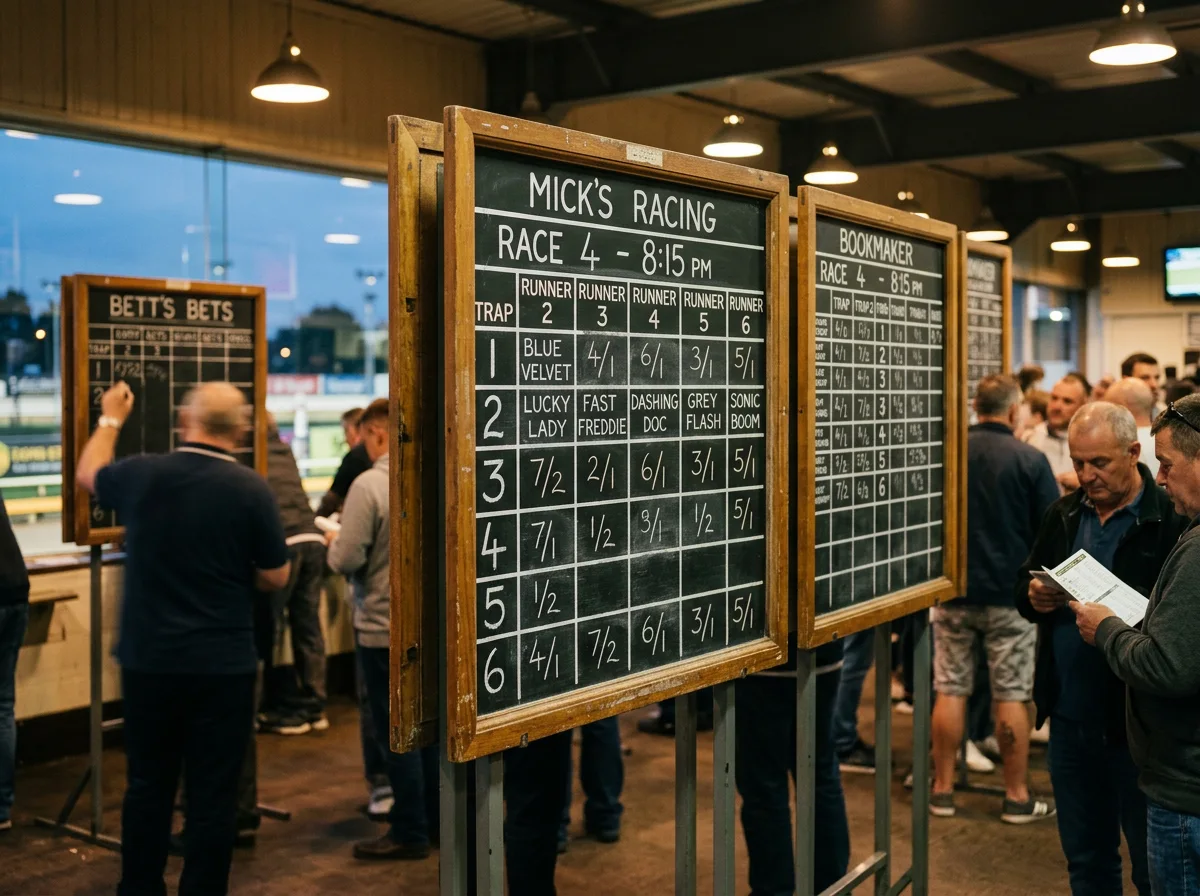
The 25% Edge Built Into Every Greyhound Betting Market
Walk into any betting shop or open any greyhound betting market online, and you are looking at a game that is rigged against you before the traps open. Not rigged in a corrupt sense — the races are fair. The rigging is mathematical, built into the structure of the odds, and it gives the bookmaker a profit margin of roughly 25% on every six-dog race.
This margin is called the overround. A typical greyhound race with six runners carries an overround of approximately 125%, meaning the implied probabilities of all six dogs winning, when added together, total 125% rather than the 100% that true probabilities would produce. That excess 25% is the bookmaker’s built-in edge. Every bet you place is priced within this inflated framework, and over time, the overround grinds down even competent bettors who do not actively work to overcome it.
Understanding this is not depressing — it is liberating. Once you know the size of the obstacle, you can measure whether your approach is overcoming it or falling short.
See also: how to win greyhound betting — expert greyhound betting strategies.
How the Overround Guarantees Bookmaker Profit on Greyhounds
Let me show you how the overround works with a concrete example, because I think most bettors have heard the term without grasping how it operates in practice.
Take a six-dog race where the bookmaker prices each runner. Convert each set of fractional odds to implied probability: a 2/1 shot implies 33.3%, a 3/1 shot implies 25%, a 4/1 shot implies 20%, and so on. In a perfectly fair book, these six percentages would sum to exactly 100%. In a real greyhound market, they sum to about 125%. The bookmaker has effectively sold 125% worth of probability, ensuring that no matter which dog wins, the total payout is less than the total amount staked.
UK greyhound betting generated turnover of approximately 1.5 billion pounds in 2022-23 — a figure that, despite a 23% decline in real terms over three years, represents an enormous volume of money flowing through these inflated markets. The bookmaker does not need to predict which dog wins. The overround does the work, guaranteeing profit across the portfolio of bets taken on every race.
Mark Bird, the former GBGB chief executive, warned that the impact of new industry taxes on greyhound racing could lead to the sport’s demise, given its reliance on bookmaker contributions. That dependency runs both ways: the sport needs bookmakers, and the bookmakers’ profitability on greyhound racing is protected by the overround structure. The bettor sits on the losing side of this equation unless they can find individual selections where the true probability exceeds the implied probability in the odds.
Restricting Winners, Limiting Stakes and Other Bookmaker Tactics
The overround is the structural advantage. But bookmakers deploy additional tactics that further tilt the equation, and anyone who has won consistently on greyhound racing knows these from painful experience.
Account restrictions are the most direct tool. A bettor who shows a sustained profit on greyhound markets will eventually find their stakes limited or their account closed. This is not conspiracy — it is business practice. Grainne Hurst, CEO of the Betting and Gaming Council, has characterised the market dynamics bluntly, noting that unlicensed operators who do not contribute to industry levies operate without the same regulatory obligations. Licensed bookmakers manage their risk by identifying and restricting winning customers, which effectively caps how much a skilled greyhound bettor can profit from any single bookmaker over time.
Best Odds Guaranteed (BOG) offers appear generous but function as a marketing tool that the bookmaker has priced into their risk model. BOG guarantees you the higher of the price you take and the starting price — but bookmakers offering BOG typically set their initial prices slightly shorter to compensate. The guarantee is not a gift; it is a feature whose cost is embedded in the market.
Promotional offers — enhanced odds, free bets, cashback — similarly function as customer acquisition costs rather than genuine value transfers. The terms attached to these promotions (wagering requirements, maximum stakes, restricted markets) ensure the bookmaker’s expected loss from the promotion is less than the expected lifetime value of the customer acquired. These are not edges for the bettor; they are edges for the bookmaker disguised as generosity.
Three Ways Bettors Can Reduce the Bookmaker’s Advantage
Knowing that the system favours the bookmaker does not mean you cannot win. It means you need to be deliberate about where you take your odds, how you structure your bets, and which markets you target.
The first and most impactful adjustment is using multiple bookmaker accounts. Greyhound odds vary between firms — sometimes significantly. A dog priced at 5/2 with one bookmaker might be 3/1 with another. Over a full season of betting, taking the best available price on every selection rather than defaulting to a single account adds percentage points of return. The off-course greyhound betting market in GB turned over nearly 740 million pounds in the 2021-22 financial year. That volume is spread across multiple operators, each pricing their markets independently. Exploiting those pricing differences is the simplest edge available.
Read our guide to greyhound betting myths debunked.
The second adjustment is moving some or all of your greyhound betting to exchanges. Betting exchanges typically carry overrounds of 103-108% rather than the 120-130% seen with traditional bookmakers. You pay a commission on net winnings (usually 2-5%), but the tighter odds mean you are starting each bet closer to true value. Exchange liquidity on greyhound markets can be thin, particularly on afternoon BAGS meetings, so this approach works best for evening meetings and featured races where more money flows through the exchange.
The third adjustment is selectivity. Betting fewer races at higher conviction rather than spreading thin across an entire card directly addresses the overround problem. Every race you bet on charges you the overround. If you bet 12 races in an evening, you are paying 25% margin twelve times. If you bet three races where your analysis produces strong selections, you are paying it three times. The overround is a per-race cost; selectivity reduces how often you incur it.
None of these approaches changes the mathematical reality of the overround. What they do is compress the gap between the bookmaker’s edge and your ability to overcome it through superior selection. The bookmaker always wins in aggregate because most bettors do not take these steps. The minority who do — who shop for odds, use exchanges, and bet selectively — can operate in the narrow space where skill outpaces the margin.
